



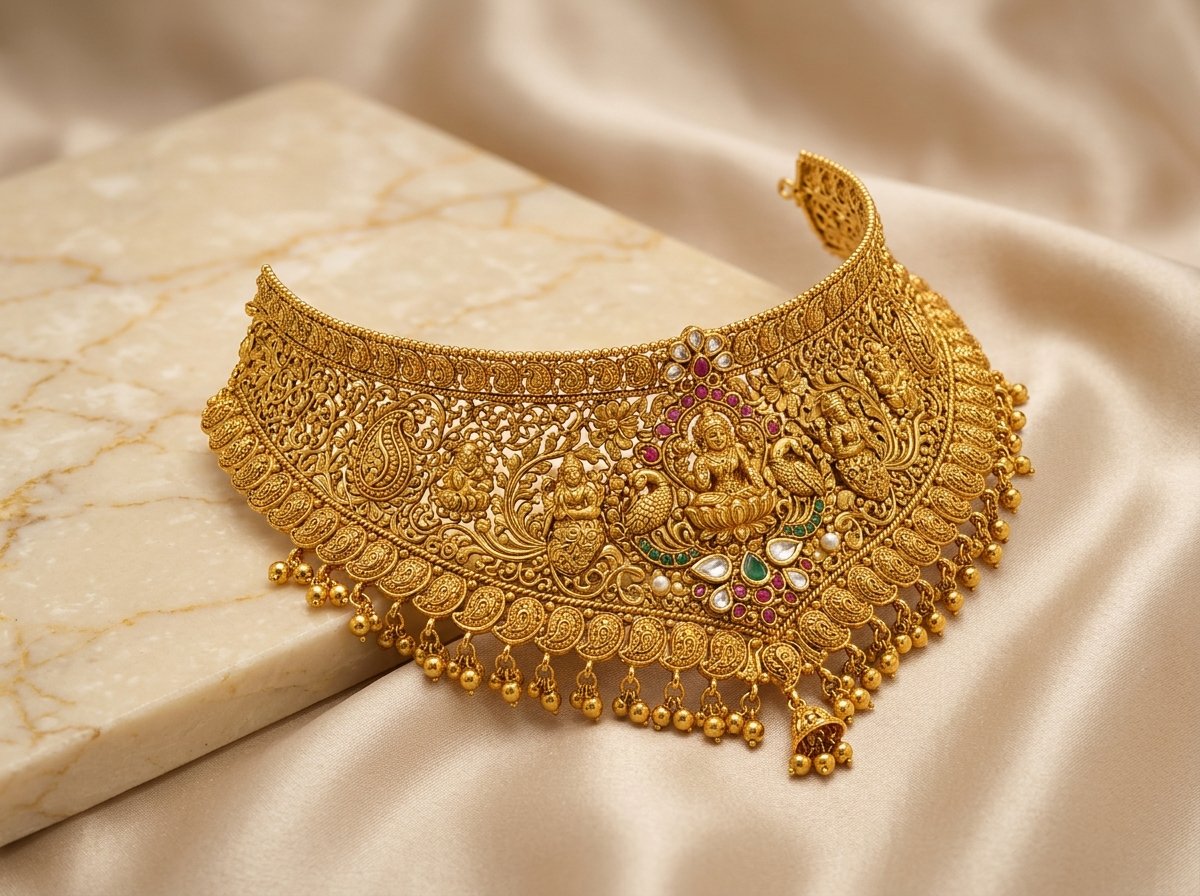
South Indian temple jewellery traces its roots back over a thousand years to the golden eras of the Chola, Pandya, and Vijayanagara dynasties. Originally commissioned by royalty solely to adorn temple deities, these sacred adornments gradually transitioned into classical Bharatanatyam dance repertoires and ultimately became the crown jewels of traditional weddings.
The Nakashi Hand-Chasing Technique
What sets authentic temple jewellery apart is that it is sculpted, not simply cast in mass-production molds. A master Nakashi karigar begins with a solid sheet of 22K gold, fixing it atop a warm bed of natural lac (resin). Using precision chisels and miniature mallets, the artisan hammers the reverse side of the metal in the ancient repoussé technique to push out volumetric contours, before turning the sheet to chase fine surface lines—such as individual feathers on a peacock or folds in Goddess Lakshmi’s silken garments.
"When you hold an authentic Nakashi temple haram, you are not merely holding grams of gold. You are holding three weeks of an artisan’s unbroken concentration, heritage prayers, and timeless devotion."— M. K. Ramanathan, Heritage Historian
Sacred Motifs & Their Auspicious Meanings
Every element in temple jewellery carries spiritual significance:
- Goddess Lakshmi: Embodiment of wealth, fertility, and auspicious beginnings.
- The Mayil (Peacock): A symbol of divine grace, royalty, and celebration of nature.
- The Kamalam (Lotus): Representative of spiritual purity rising untainted through worldly waters.
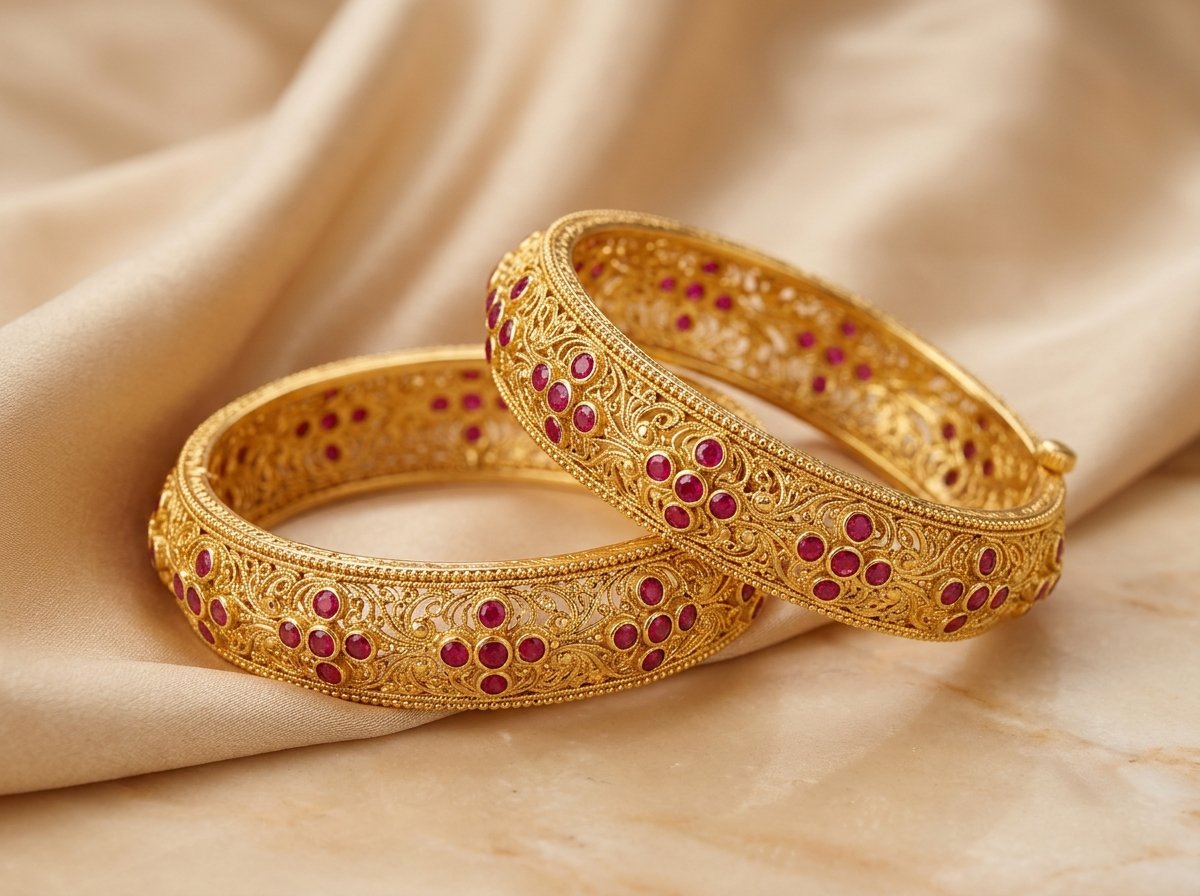
- Kemp Stones & Rubies: Evoking royal vitality, courage, and warding off negative energies.


Patron Conversations & Insights (6)
The insight on pairing an antique Nakashi choker with a longer Rani Haar was immensely helpful for my wedding planning. The contrast with our Kanchipuram silk turned out majestic!
Brilliant explanation of 22K vs 18K gold alloys. Many buyers assume higher karat is always better without realizing why 18K is structurally required for secure diamond prongs.
Thank you for highlighting that toothpastes can damage mirror-finish gold! I have switched exclusively to the lukewarm soap bath routine described here.
Share Your Thoughts
Have a question about fine jewellery, styling, or custom bridal bespoke commissions? Leave your comment below.